

 Projective Tests: Peeling Back Layers
Have you ever looked at a Rorschach inkblot and pondered, “What do I see?” Or perhaps, while listening to a poem, felt an intimate connection? This episode delves deep into the mystery of Freudian projective tests and uncovers the strong bond between psychology and poetry.
Rorschach and Personal Interpretations
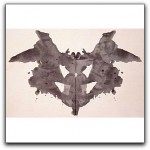
The Rorschach test, often known as the inkblot test, isn’t just about identifying shapes. When you interpret these inkblots, you might be revealing hidden thoughts and emotions.
Stories Through Thematic Apperception Test (TAT)
Then there’s the Thematic Apperception Test (TAT). It relies on one’s ability to spin stories from visuals. However, these stories can sometimes echo personal experiences or desires, offering insights to the storyteller’s psyche.
Sketching Insights with the House, Tree, Person Tests
Drawing a house might seem straightforward. However, in the House, Tree, Person tests, such a sketch can shed light on an individual’s personality and emotional state.
Poetry’s Reflective Nature
Denise Duhamel’s poem “How It Will End” serves as more than just poetic expression. It illustrates how poetry can capture everyday psychology. Furthermore, poems encapsulate feelings and experiences, akin to projective tests that tap into innermost thoughts.
To sum up, our minds often communicate their deepest thoughts and desires, be it through an abstract inkblot or a poem’s touching verses. If your curiosity is piqued by the intricate ties between Freud’s projective tests and poetry, do delve deeper into this episode.
For more insights and discussions, don’t forget to visit this episode.
Resources for this Episode
-
- Many thanks to Denise Duhamel for allowing me to read her wonderful poem How It Will End on this episode. You can find out more about her here.
- You can find more poetry by Denise Duhamel here: Denise Duhamel on Amazon

Projective Tests
-
- Information about the Rorshach Test from Wikipedia
-
- Information about the Thematic Apperception Test from the Encyclopedia of Mental Disorders
-
- Information about the Thematic Apperception Test from Wikipedia

Jayesh
October 18, 2009I can see 2 ladies standing back to back, right in the center of the inkblot. on the right hand side i can see a evil man gently holding a baby and below it i could see two face one of a boy and one skull. On the left hand side i can see 4 dog faces but on the whole i can see is 2 thoughts spliting the same personality (Lady) into 2 different directions.
Michael
October 18, 2009That’s a good clip. Get Smart was one of my favorite shows as a kid. I bought the first season on DVD and the episodes were a little difficult to watch actually. Brought back memories, but the plot moved along so slowly compared to the typical TV show today….
AJ Jack
October 18, 2009Maxwell Smart does the Rorschach test.
http://www.youtube.com/watch?v=ji1SmtvQUcM
This always comes to mind when I hear about those tests.
Michael
October 18, 2009Jade: good point. I think most psychologists try not to read too much into one drawing, but rather include a child’s drawings along with everything else they know about the child and with other tests the child has been given. A house with a fence around it may indeed be simply the way the child remembers how their previous home looked. However, if during therapy sessions the child acts very withdrawn and speaks very little, and when the child plays with toys and dolls during play therapy sessions there are also indications of fear and the need for protection, then an overall “picture” of a guarded or fearful child may emerge from all this information.
jade
October 18, 2009Hi Michael
I know this pod-cast is about two years old, and i’m not sure if you’ll read this comment because of this reason, but i’m going to leave my comment anyway =).
I’m not a Psychology student nor do i claim to know that much about the subject – but i am a beginner and am very interested in pursuing in this area as a career.
I would just like to say regarding the house, tree, person test, that when a child draws a house with a fence that is locked around it, it may not mean that the child is necessarily a guarded child but just simply is drawing that from their memory – as there house may look this.
I’ve only just come across your website but i have to say i find it rather interesting and helpful, as i wish to learn more about this subject, so thank you =).
Michael
October 18, 2009Elizabeth, I appreciate your comment and I’m definitely going to follow up by getting ahold of those articles. Who knows – maybe there’s another episode here. It’s my goal to keep my listeners up to date. I’ll be in touch.
Elizabeth Koonce
October 18, 2009I recently started listening to your backlog of podcasts and videos. I especially liked the ones about Little Albert. However, I'm half-way through this podcast and I'm afraid that your initial explanation of the Rorschach seems inaccurate. Since the 1970s, the Rorschach norms are based on healthy, non-patient samples. The latest one is an international sample collected from 21 countries. It has "means and standard deviations" just like self-report questionnaires. Although it *is* excellent at identifying psychotic spectrum disorders (because it is a test of perception even more than it is a "projective" test), it can definitely be used to assess individual differences in "normal" personality.
I'm a graduate student and Rorschach researcher, and it breaks my heart that so many myths about it persist despite a large body of evidence that it is a valid test. I appreciate your sympathies and your evenhandedness, but when it comes to the Rorschach I think you can be much more accurate.
Here are a couple of articles that are relevant (full disclosure: Greg Meyer is my advisor)…
Meyer, G. J., Erdberg, P., & Shaffer, T. W. (2007). Towards international normative reference data for the Comprehensive System. Journal of Personality Assessment, 89, S201-S216.
Meyer, G. J., & Kurtz, J. E. (2006). Guidelines Editorial – Advancing personality assessment terminology: Time to retire "objective" and "projective" as personality test descriptors. Journal of Personality Assessment, 87, 223-225. [PDF © Lawrence Erlbaum Associates]
Personality Pedagogy Newsletter Volume 4, Number 2, October, 2009 « Personality Pedagogy Blog
October 18, 2009[…] 4. All about Projection […]
Michael
October 18, 2009Excellent observation Kevin! Yes indeed – one could easily argue that what the therapist sees in the drawings are actually projections of his or her own thoughts and feelings. That’s another critique of these methods (as well as dream interpretation for example). I would say that this is why a full “battery” of tests is needed to try to “triangulate” if you will, on exactly what the problem is.
Glad you’re enjoying the episodes. Looks like I better get crackin’ on the next episode before you catch up to the current one. – Michael
Kevin
October 18, 2009Pretty interesting information on projection; however, I was wondering if in the case of interpreting projections if it wouldn’t require a projection from the psychologist or the interpreter? As an example on the drawing of a house with a chimney, my first thought went to “smoke signals” and then to a warm home as being a second option of interpretation…
I guess that is the hardest thing for me to understand about Psychology is the data collected seems open to an interpretation which is then seemingly a projection of the interpreter.
Anyway, I think this will be the third or fourth time I’ve said this, but I am enjoying the podcasts – I don’t think I’ve spent this many hours listening to so many podcasts in a two day period, ever.
Take care, Kevin.